
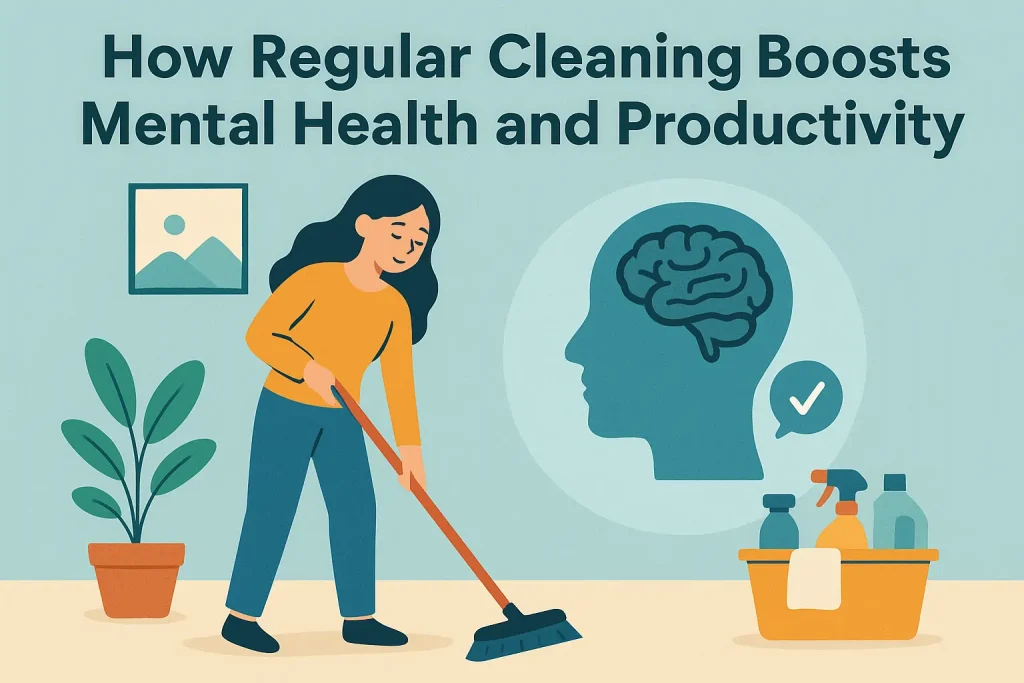
Mess and clutter don’t just make a home look untidy — they affect how we feel, think, and get things done. In this post, we’ll explain the mental health benefits of regular house cleaning, how a consistent cleaning routine improves productivity, and give practical tips and a simple cleaning schedule you can start this week.
The link between clean spaces and mental well-being
Several studies and behavioural experts agree: a tidy environment reduces stress, anxiety, and mental fatigue. Clutter creates visual noise that distracts the brain, increasing cortisol levels and making it harder to relax. By contrast, a clean home creates a calmer atmosphere that supports emotional stability and better sleep — two big drivers of improved mental health.
How cleaning reduces stress and anxiety
- Less visual distraction: Fewer items competing for attention means your brain can focus on one task at a time.
- Sense of control: Completing cleaning tasks produces small wins that boost mood and self-efficacy.
- Improved sleep: Clean bedrooms are associated with better sleep quality, which supports emotional regulation.
Why a clean home improves productivity
Productivity is about focus, energy, and routines — and a regular house cleaning routine supports all three. When the space around you is organised, you waste less time searching for things, feel less distracted, and have more mental clarity for work, study, or family tasks.
Practical productivity gains from cleaning
- Faster start-up times: A tidy desk or living area allows you to begin tasks immediately without clearing space first.
- Better concentration: Fewer distractions help you maintain flow and complete tasks faster.
- Improved decision-making: Reducing visual clutter reduces cognitive load so you can make clearer decisions.
Simple, science-backed cleaning habits that help
Start with small, consistent habits. The goal is not perfect cleanliness — it’s a reliable routine that supports your mental health and productivity.
Daily habits (5–15 minutes)
- Make the bed each morning.
- Clear dishes and wipe kitchen surfaces after meals.
- Spend 5–10 minutes of evening tidy-up (put things back in place).
Weekly habits (30–90 minutes)
- Vacuum or mop main living areas.
- Clean bathrooms and mirrors.
- Change bed linens and empty trash.
Monthly habits
- Declutter one zone (cupboards, paperwork, wardrobe).
- Deep clean appliances (oven, fridge) and vents.
- Review and donate items you no longer need.
Creating a cleaning schedule that sticks
Use the “two-minute rule” to beat procrastination: if a task takes two minutes or less (putting away shoes, wiping a counter), do it immediately. Pair cleaning with another habit (e.g., tidy for 5 minutes after dinner), use a checklist, or set an alarm to build consistency.
Practical tips to get started
- Break tasks into tiny steps: “Tidy desk” becomes “clear coffee cups,” “stack papers,” “wipe surface.”
- Use storage solutions: Bins, baskets and labels make tidying faster and maintain order.
- Declutter first: Fewer items mean easier cleaning and less stress.
- Ask for help: Split chores with housemates or hire a professional cleaner for deep cleans.
How professional cleaning can help your mental health
If life is busy, booking a regular cleaning service can restore order and free mental bandwidth. Professional cleaners handle the big, infrequent tasks so your daily routine stays manageable — and your home remains a supportive environment for mental wellbeing and work.
Book a regular cleaning or schedule a one-off deep clean to get started.
Short FAQ
Q: How often should I deep clean?
A: Aim for a deep clean every 1–3 months, depending on household size and activity. Light weekly maintenance keeps the home manageable between deep cleans.
Q: Can cleaning actually reduce anxiety?
A: Yes. Many people report reduced anxiety after decluttering and establishing routines. Cleaning creates structure and visible progress, both of which support emotional well-being.
Q: I feel overwhelmed — where do I start?
A: Start with one small win: make your bed, clear a single surface, or set a 10-minute timer for tidying. Small wins build momentum.
Conclusion & Call to Action
Regular house cleaning is more than aesthetics — it’s an investment in mental health and daily productivity. By adopting small, consistent habits, using a simple schedule, and outsourcing larger tasks when needed, you can create a calmer, more focused home environment.
If you’d like a free checklist or a personalised cleaning schedule for your home, contact us or get a free quote today.